Domain ferngesteuerte-autos.de kaufen?
Wir ziehen mit dem Projekt
ferngesteuerte-autos.de um.
Sind Sie am Kauf der Domain
ferngesteuerte-autos.de interessiert?
domain@kv-gmbh.de · 0541-91531010
Domain ferngesteuerte-autos.de kaufen?
Cake or fake?
It depends on the context. If you are asking about a choice between eating cake or something that is not real, then cake would be the preferred option. However, if you are asking about the authenticity of something, then fake would imply that it is not genuine or real. **
Travelling or traveling?
Both "travelling" and "traveling" are correct spellings of the word, but they are used in different regions. "Travelling" is more commonly used in British English, while "traveling" is more commonly used in American English. **
Ähnliche Suchbegriffe für Or
Top-Angebote
Produkte zum Begriff Or:

-
Will or gonna?
"Will" and "gonna" are both used to express future actions, but there are slight differences in their usage. "Will" is more formal and is used in more formal situations, while "gonna" is a more informal and colloquial way of expressing future actions. **
-
Do or does?
The choice between "do" and "does" depends on the subject of the sentence. "Do" is used with plural subjects and "does" is used with singular subjects. For example, "They do their homework" and "She does her homework." **
-
Anyway or anyways?
Both "anyway" and "anyways" are commonly used in spoken English to mean the same thing. However, "anyway" is more widely accepted and considered to be the standard form. "Anyways" is often considered to be more informal or colloquial. **
-
Doesn't or don't?
The correct form to use depends on the subject of the sentence. "Doesn't" is used with singular subjects, while "don't" is used with plural subjects. For example, "He doesn't like coffee" (singular subject) and "They don't like coffee" (plural subject). **
Gucci or Prada?
That is a subjective question and it depends on personal preference. Both Gucci and Prada are luxury fashion brands known for their high-quality products and unique designs. It ultimately comes down to individual style and taste. **
Do or make?
The choice between "do" and "make" depends on the context and the specific action being referred to. "Do" is generally used for activities or actions that involve performing or carrying out something, while "make" is used for creating or producing something tangible. For example, you would say "do your homework" but "make a cake." **
Top-Angebote
Produkte zum Begriff Or:
-
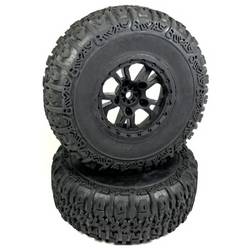
Absima 1:10 Monstertruck, Truggy, Buggy Kompletträder offroad Schwarz 1 St. 2500029Es gibt Räder, die sehen einfach überall gut aus. Unser 1:10 "Universal-Offroad Räderset" gehört da wohl dazu. Ursprünglich für Short Course Trucks konzepiert, passen diese Wheels auf eine Vielzahl von Fahrzeugen wie Trucks, Truggies, Sand Buggies und sogar Crawler. Durch den Medium Reifen-Compound und das raue Profil sind diese Räder sehr langlebig und bieten im allgemeinen einen guten Grip.14,95 €*Versand: 4,95 €Sichere Weiterleitung zum Anbieter
-
Cake or fake?
It depends on the context. If you are asking about a choice between eating cake or something that is not real, then cake would be the preferred option. However, if you are asking about the authenticity of something, then fake would imply that it is not genuine or real. **
-
Travelling or traveling?
Both "travelling" and "traveling" are correct spellings of the word, but they are used in different regions. "Travelling" is more commonly used in British English, while "traveling" is more commonly used in American English. **
-
Will or gonna?
"Will" and "gonna" are both used to express future actions, but there are slight differences in their usage. "Will" is more formal and is used in more formal situations, while "gonna" is a more informal and colloquial way of expressing future actions. **
-
Do or does?
The choice between "do" and "does" depends on the subject of the sentence. "Do" is used with plural subjects and "does" is used with singular subjects. For example, "They do their homework" and "She does her homework." **
Ähnliche Suchbegriffe für Or
-
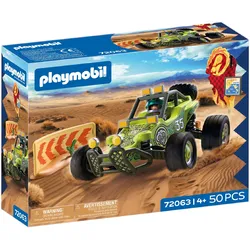
PLAYMOBIL 72063 - Offroad BuggyStaub wirbelt auf, die Sonne brennt vom Himmel der neuseeländische Rennfahrer gibt Gas! Mit seinem hochmodernen Offroad-Buggy jagt er durch die trockene Wüstenetappe des "Ring of Fire"-Rennens in Chile. Der Buggy ist perfekt für dieses Gelände gerüstet: Die Federung an den Hinterachsen sorgt für extra Fahrkomfort im holprigen Terrain und hinten bietet eine Reifenhalterung Platz für ein echtes Ersatzrad abnehmbar, um unterwegs die vorderen Reifen zu tauschen. Auch Werkzeuge, ein Benzinkanister, ein Seil und ein Koffer für Karte und Funkgerät sind jederzeit griffbereit. Vorne punktet der Buggy mit einem Rammbügel inklusive Halterungen für zusätzliche Lampen und Stangen perfekt für Nachtfahrten oder schwierige Sichtverhältnisse im Wüstensand. Und falls es mal kracht: Die beiliegende Leitplanke bringt echtes Rennfeeling ins Spiel. Die Wüstenfüchse sind gebannte Zuschauer! Figuren: 1 Rennfahrer Tiere: 2 Wüstenfuchswelpen Zubehör: 1 Helm, 2 Armschützer, 1 Offroad-Buggy, 1 Ersatzrad, 1 Fahnenmast, 1 Landkarte, 1 Info-Tafel, 1 Koffer, 1 Benzinkanister, 1 Walkie-Talkie, 1 Ringschlüssel, 1 Seil, 1 Leitplanke, 1 Kaktus24,99 €*Versand: 3,95 €Sichere Weiterleitung zum Anbieter
-
Anyway or anyways?
Both "anyway" and "anyways" are commonly used in spoken English to mean the same thing. However, "anyway" is more widely accepted and considered to be the standard form. "Anyways" is often considered to be more informal or colloquial. **
-
Doesn't or don't?
The correct form to use depends on the subject of the sentence. "Doesn't" is used with singular subjects, while "don't" is used with plural subjects. For example, "He doesn't like coffee" (singular subject) and "They don't like coffee" (plural subject). **
-
Gucci or Prada?
That is a subjective question and it depends on personal preference. Both Gucci and Prada are luxury fashion brands known for their high-quality products and unique designs. It ultimately comes down to individual style and taste. **
-
Do or make?
The choice between "do" and "make" depends on the context and the specific action being referred to. "Do" is generally used for activities or actions that involve performing or carrying out something, while "make" is used for creating or producing something tangible. For example, you would say "do your homework" but "make a cake." **
* Alle Preise verstehen sich inklusive der gesetzlichen Mehrwertsteuer und ggf. zuzüglich Versandkosten. Die Angebotsinformationen basieren auf den Angaben des jeweiligen Shops und werden über automatisierte Prozesse aktualisiert. Eine Aktualisierung in Echtzeit findet nicht statt, so dass es im Einzelfall zu Abweichungen kommen kann. ** Hinweis: Teile dieses Inhalts wurden von KI erstellt.